


1. Introduction
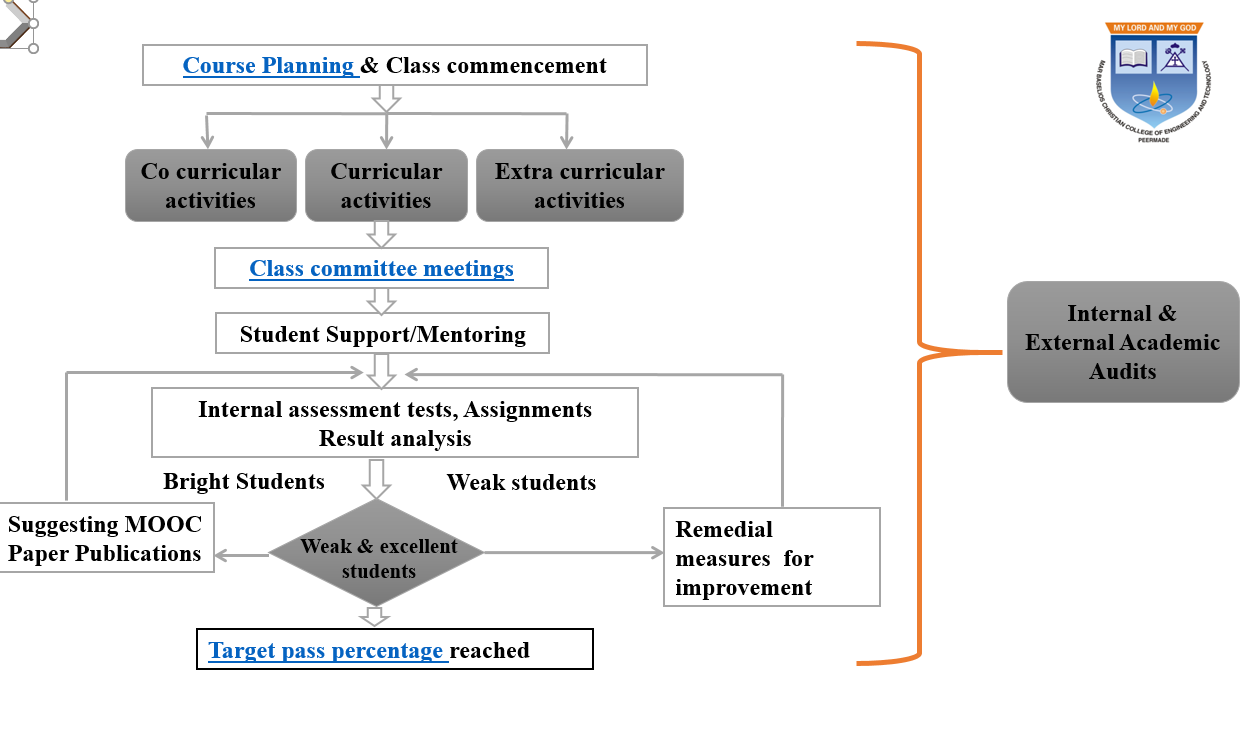
This report explains the academic process followed by the institution to ensure effective teaching–learning practices and to achieve the target pass percentage. The process includes course planning, academic activities, student mentoring, continuous assessment, and improvement strategies monitored through academic audits.
2. Course Planning and Class Commencement
At the beginning of each semester, course planning is carried out by the faculty members. This includes preparing lesson plans, scheduling lectures, and organizing teaching resources. Once planning is completed, classes commence according to the academic calendar.
3. Academic Activities
The institution organizes different types of activities to enhance student learning and development:
4. Class Committee Meetings
Periodic class committee meetings are conducted with faculty members and student representatives. These meetings help in reviewing course progress, collecting feedback from students, and addressing any academic difficulties.
5. Student Support and Mentoring
Faculty mentors provide academic and personal guidance to students. Mentoring helps identify students’ strengths and weaknesses and provides necessary support to improve academic performance.
6. Internal Assessment and Result Analysis
Students are evaluated through internal assessment tests, assignments, and other academic activities. The results are analyzed to understand the overall performance of students and to identify both high-performing and weak students.
7. Identification of Bright and Weak Students
Based on the assessment results:
8. Remedial Measures for Improvement
Remedial measures include special coaching classes, additional assignments, doubt-clearing sessions, and personal guidance from faculty members to help weak students perform better.
9. Achievement of Target Pass Percentage
Through continuous monitoring, mentoring, and academic support, the institution aims to achieve the target pass percentage for each course and ensure overall academic success.
10. Internal and External Academic Audits
The entire academic process is regularly reviewed through internal and external academic audits. These audits ensure that the teaching–learning process meets quality standards and helps in implementing improvements wherever necessary.
_1773637996.png)
The structured academic process ensures effective planning, continuous evaluation, and necessary support for students. By identifying both bright and weak students and implementing appropriate measures, the institution successfully improves student performance and achieves the desired academic outcomes.
Student diversity in academic institutions refers to the presence of learners with different abilities, learning speeds, interests, and academic backgrounds. To ensure effective learning for all students, institutions adopt different teaching strategies and support systems that address the needs of both slow learners and advanced learners.
11. Identification of Student Categories
Students are generally categorized based on their academic performance and learning pace into two groups:
This classification helps faculty members design appropriate support mechanisms to improve learning outcomes.
12. Support for Slow Learners
Slow learners are students who require additional guidance to understand course concepts. To help them improve their academic performance, the following measures are implemented:
These activities help slow learners gain confidence and improve their academic results.
13. Opportunities for Advanced Learners
Advanced learners are students who demonstrate strong academic abilities and interest in deeper learning. The institution encourages them to enhance their knowledge and skills through the following activities:
These initiatives help advanced learners develop research skills, technical expertise, and competitive readiness.
14. Benefits of Catering to Student Diversity
Providing tailored support for different categories of learners results in several benefits:
15. Conclusion
Catering to student diversity is an essential component of an effective teaching–learning process. By providing remedial support to slow learners and advanced opportunities for high-performing students, the institution ensures inclusive education and promotes academic excellence for all students.


